"Remi was really nice and the owner of the mochi shop too"
Sakai · 10 Minutes From Namba · From $45
Knife Making in Osaka
Osaka's knives are made in Sakai, where smiths, sharpeners and handle makers each do one stage. A guided walk gets you inside a working sharpener's floor or a forge; a workshop lets you fit the handle on your own knife and have your name engraved. Nobody here hands a visitor a hammer, and that is the honest version of knife making in Osaka.
From
$46
per person
current promotion, usually $77
Free cancellation
- 4.8 / 5 97+ Reviews
- 3.5h Walking tour length
- $45–259 Sakai knife bookings, Oct 2026
- Free Cancellation
The Experience
What the Walking Tour Includes
Tuesdays and Thursdays visit a knife maker's sharpening floor. Wednesdays visit a blacksmith.
Highlights
- Order your own customizable knives (Optional)
- Discover traditional sweets from Sakai and get a sweet snack to eat on the tour
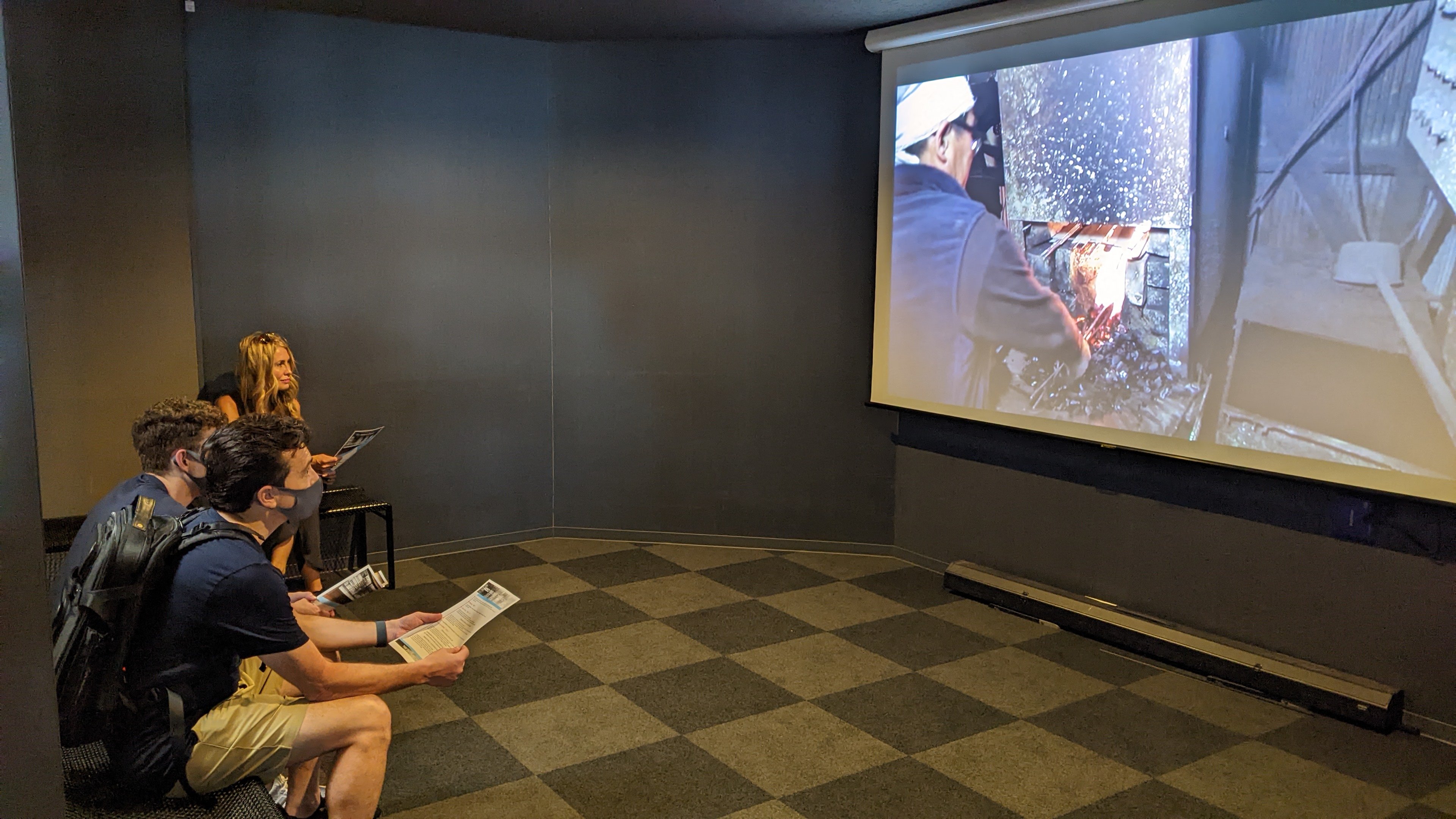
- Walk through the Sakai Traditional Crafts Museum and its knife history floor
- Visit the Yamawaki Hamono knife maker, or the De Sakai blacksmith's forge
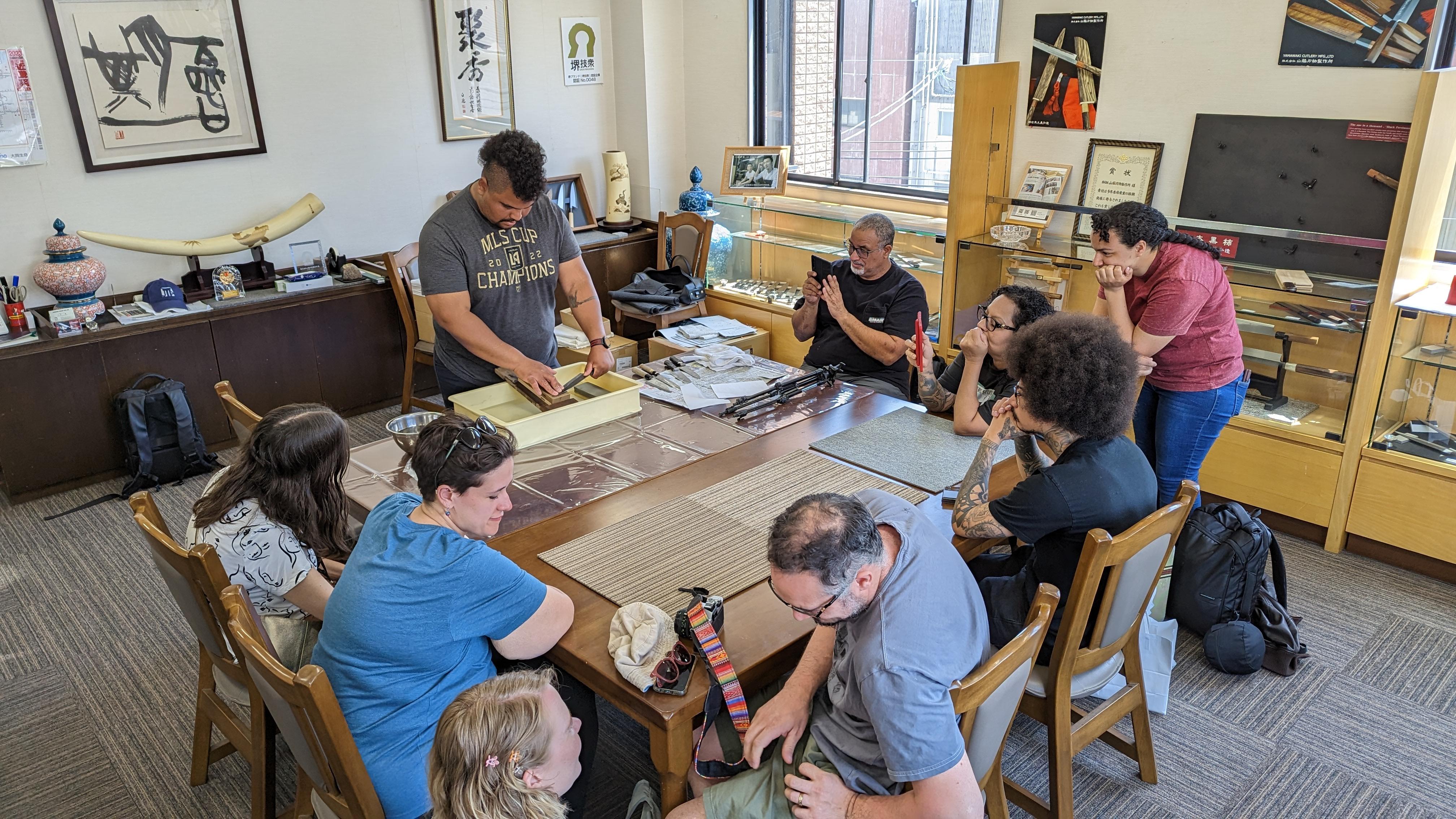
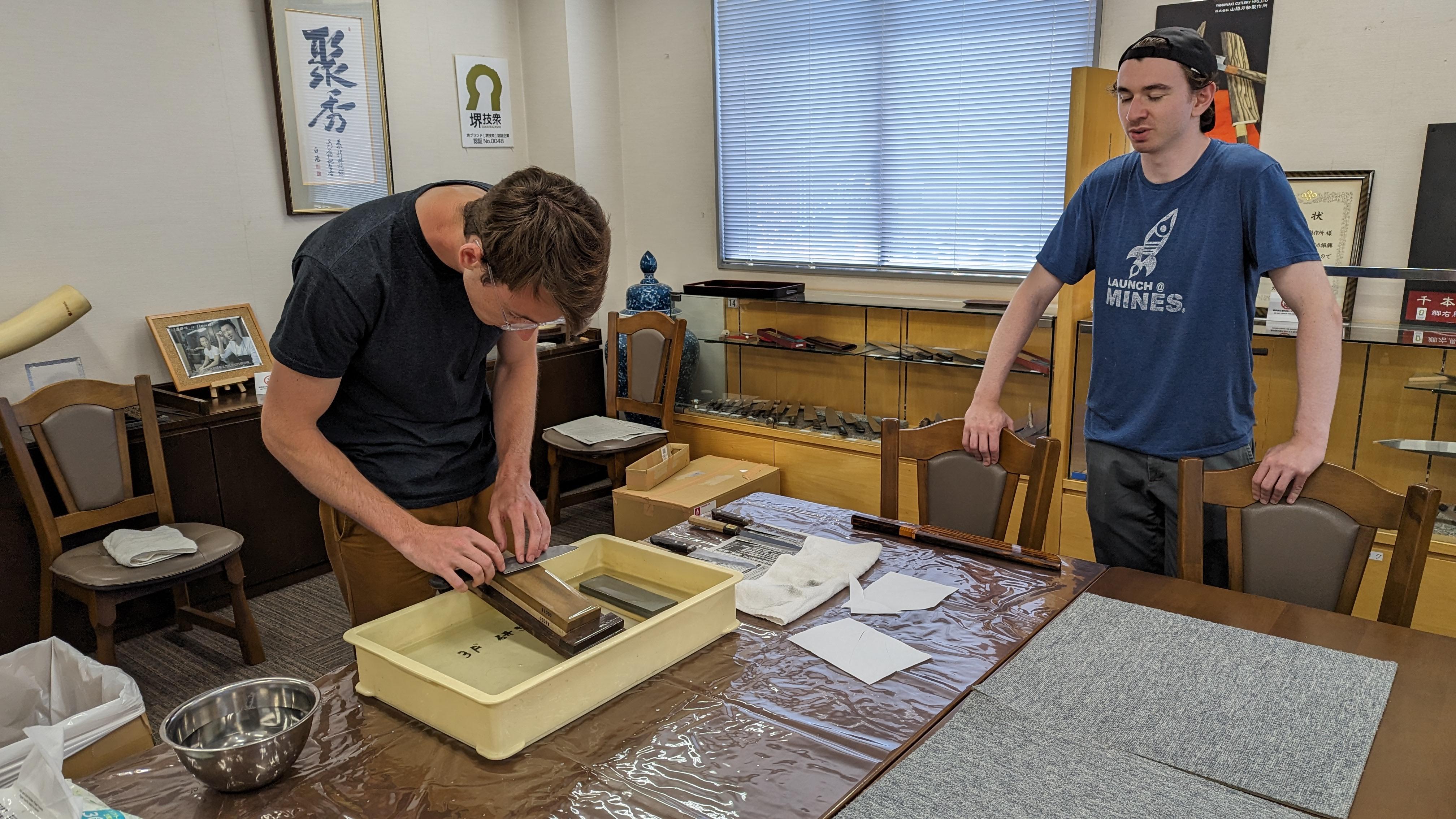
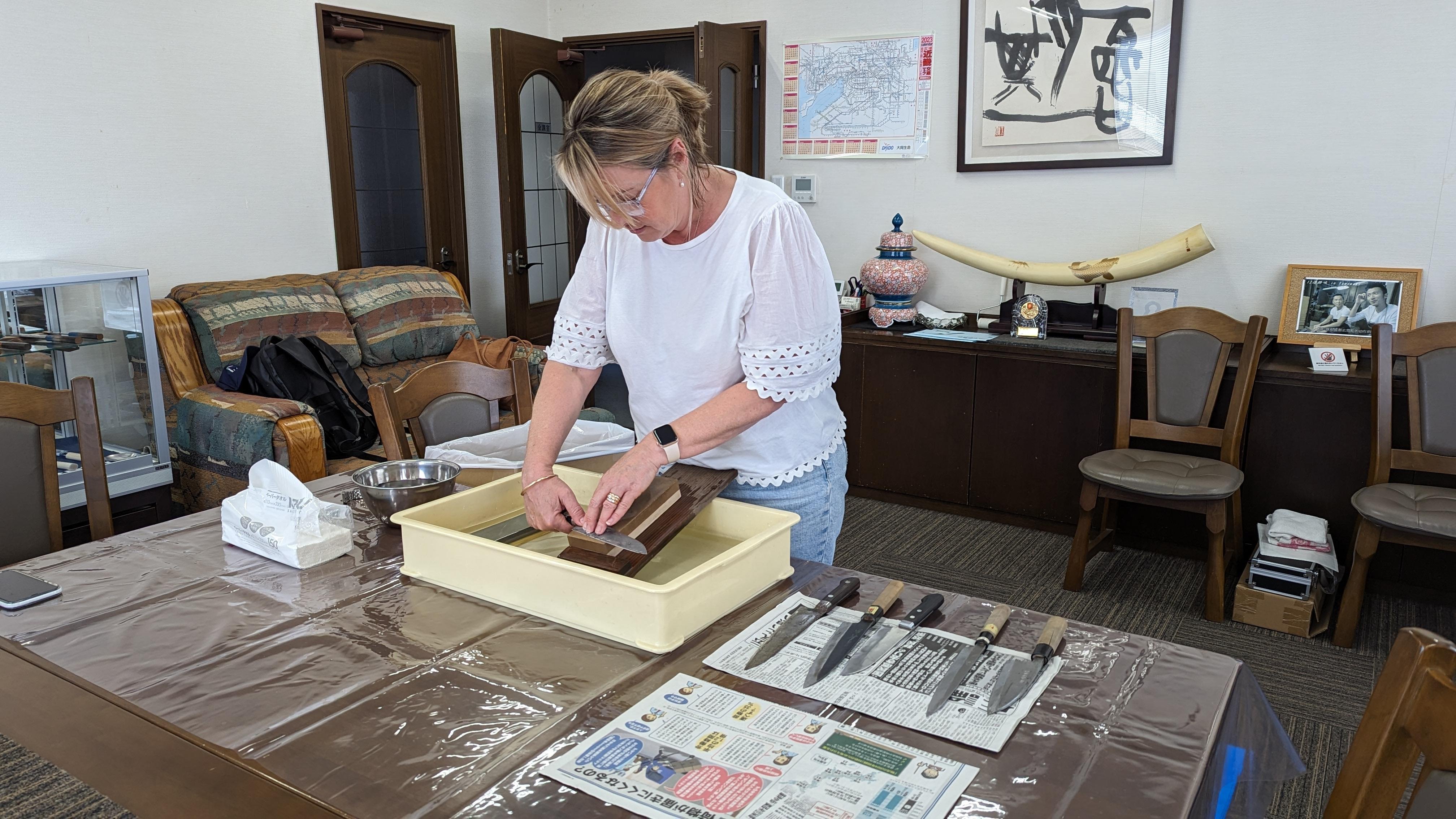
- Learn traditional Japanese whetstone sharpening
What's Included
- Bilingual Local guide
- 1 Sweet at the sweet shop
- Shopping time
- Access to the Knife Factory
- Knife sharpening technic lesson
- Customizable knife order (option)
How the Sakai Walk Runs
About three and a half hours on foot from Sakai Station, in a group of up to ten.
Pick your day
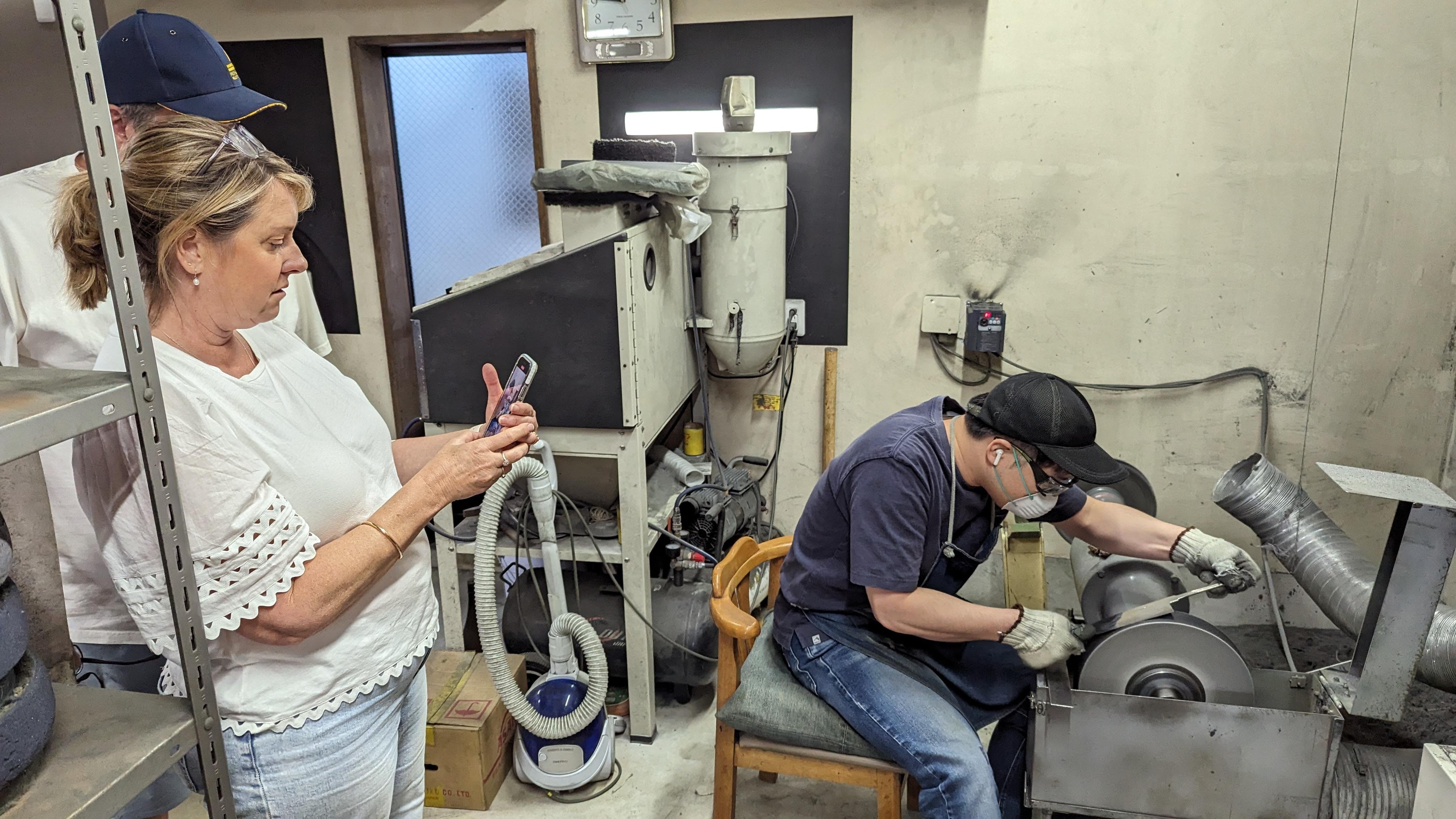
Tuesday or Thursday goes to the Yamawaki Hamono knife maker, where blades arrive from the smith and are sharpened and finished. Wednesday goes to a blacksmith's forge.
Meet at Sakai Station
Nankai Main Line from Namba, about 10 minutes. Guides speak English, and some also speak French.
Sweets, then the museum
A traditional sweet shop first, with one sweet included, then the Sakai Traditional Crafts Museum and its knife shop.
Inside the workshop
Watch the blades being finished, try whetstone sharpening, and order a custom knife if you want one. The knife is paid separately.
Photo Gallery
Inside Sakai's Knife Workshops
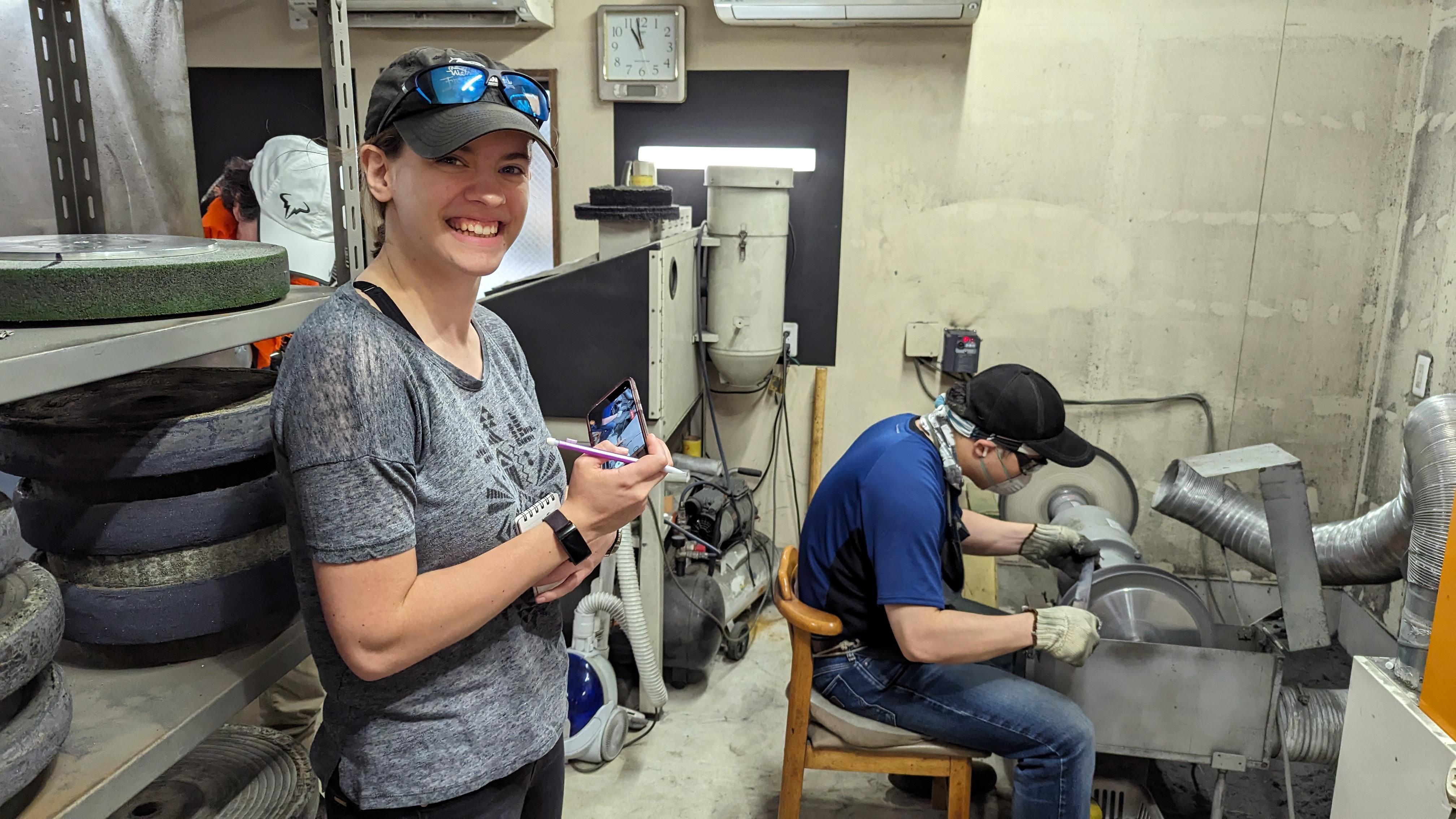
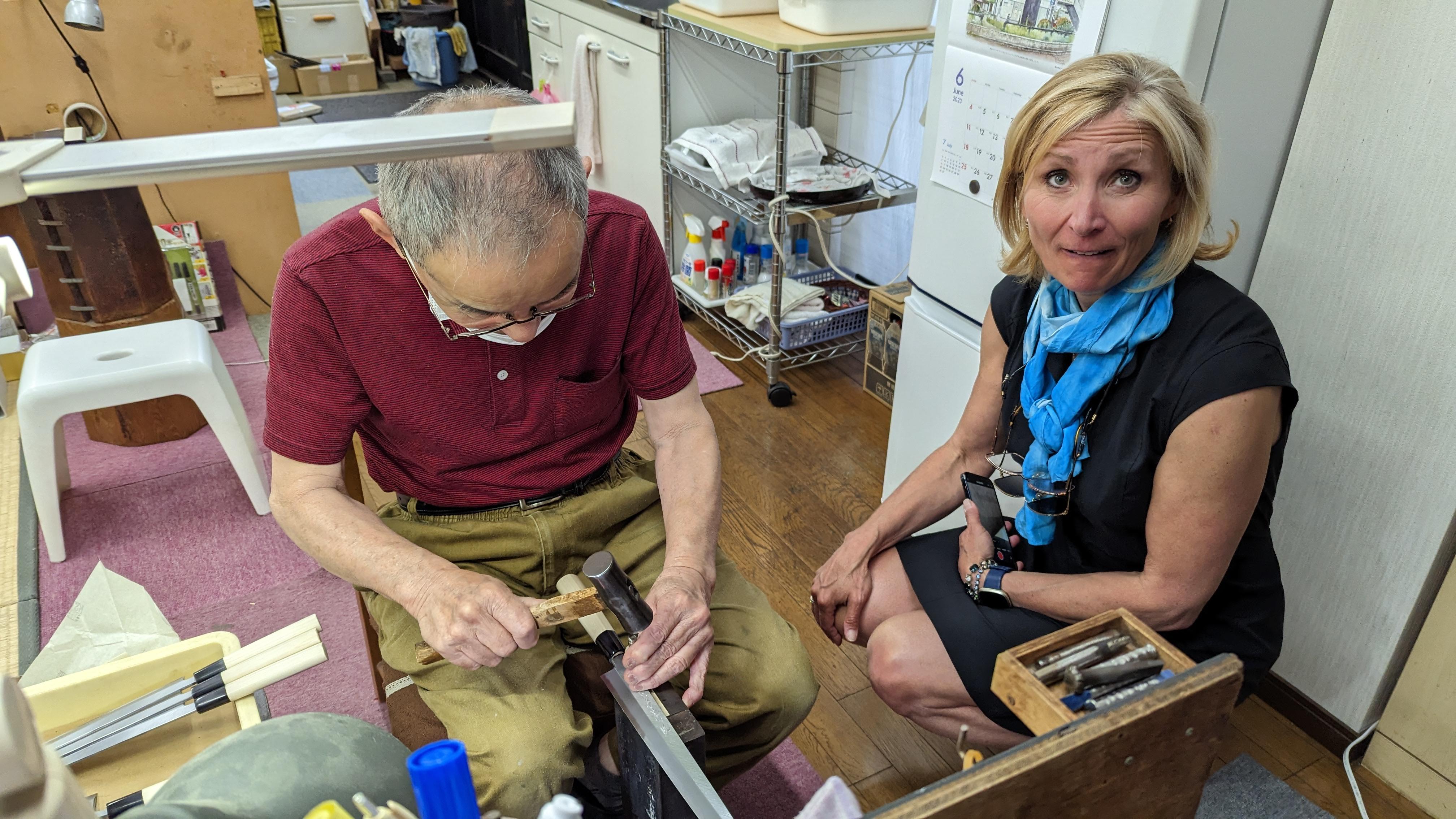
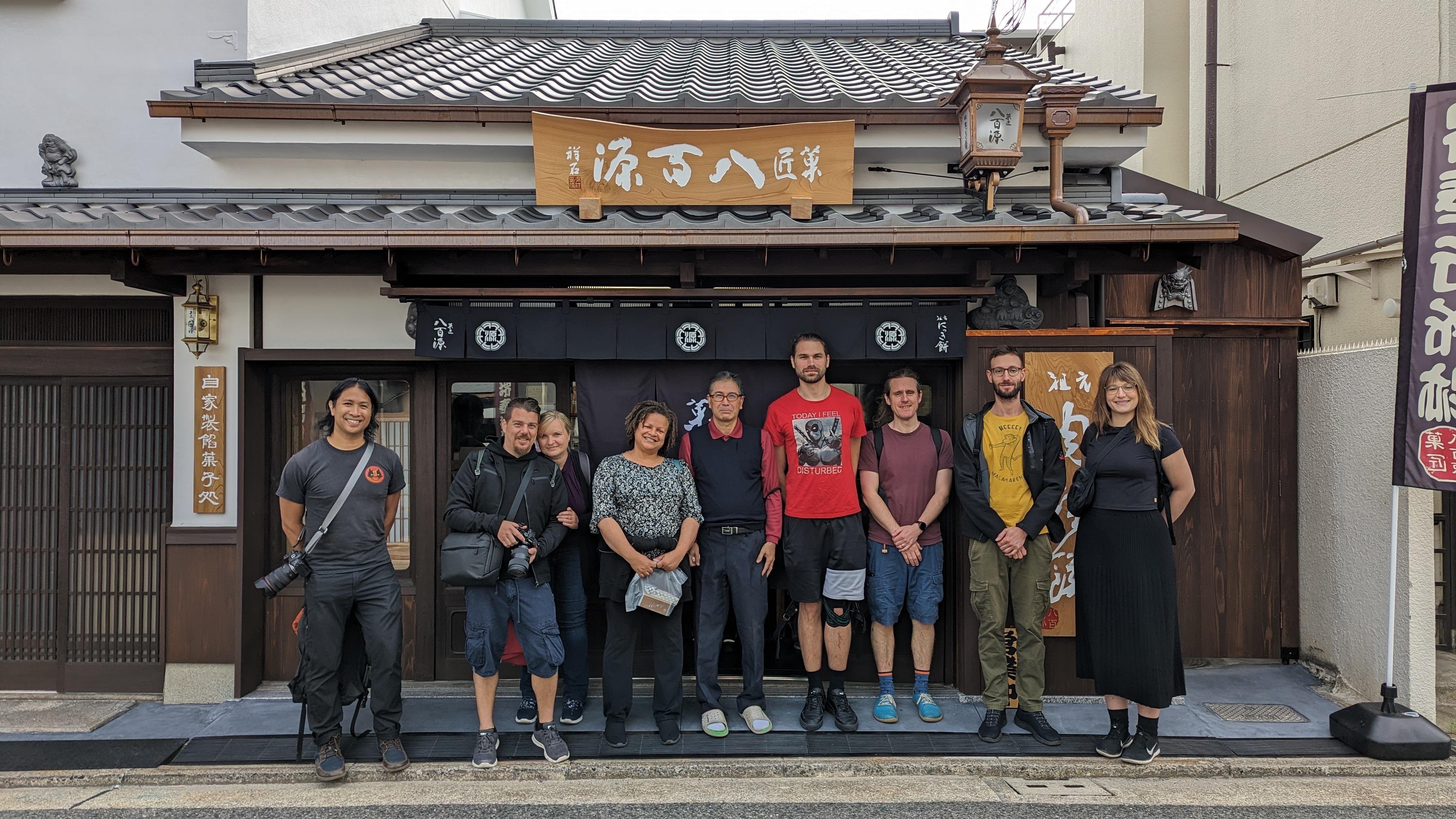
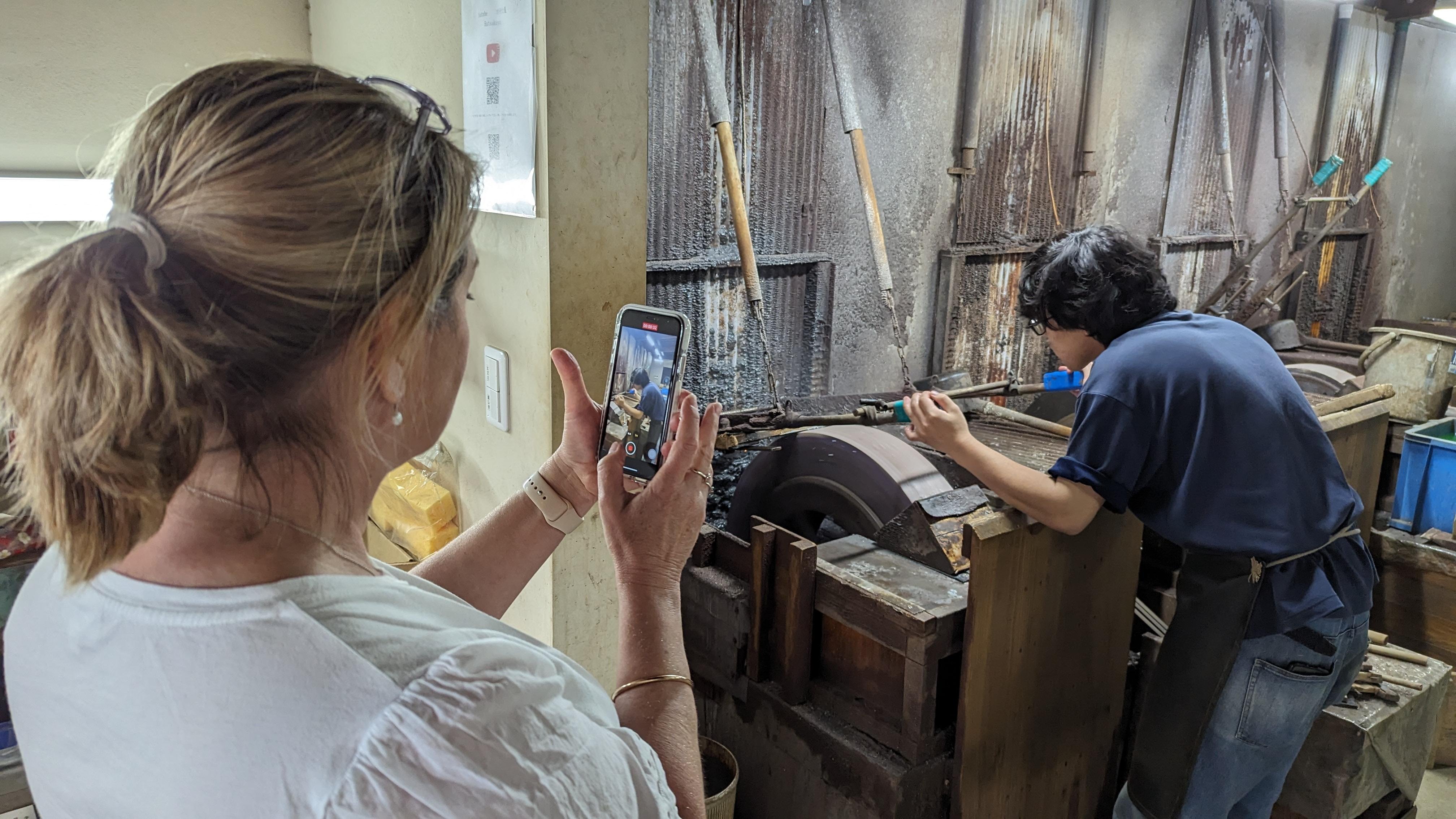
The sharpening wheels, the crafts museum and the walk through the old town.
Book Your Experience
Check Availability & Prices
Select your preferred date and time. Cancel up to 24 hours in advance for a full refund.
Three Ways Into Sakai's Knife Trade
Watch the work, finish a knife of your own, or learn the sharpener's part. Prices as of October 2026.
| Feature | 4.8/5 · 97 REVIEWS Knife maker or blacksmith walk | Handle-making and engraving | Sharpening class |
|---|---|---|---|
| What you do | watch a sharpener (Tue, Thu) or a smith (Wed), then try whetstone sharpening | fit the handle onto a Sakai blade; a craftsman engraves your name | sharpen on whetstones, then fit a handle, on practice knives |
| You leave with | a knife only if you order one (optional, extra) | your own finished knife, packed for travel | the skill; no knife is included |
| Length | 3.5 hours | 2.5 hours | 1.5 hours |
| From (October 2026) | about $45 | about $259 | about $69 |
| Group | small group, up to 10 | private | small group, up to 6 |
| Includes the crafts museum | yes | a private knife museum | a knife museum visit |
| Check Availability | See the workshop | See the class |
Other Sakai Options
Every Sakai Knife Booking We Track
Prices, ratings and review counts as of October 2026.
 HANDLE + YOUR NAME
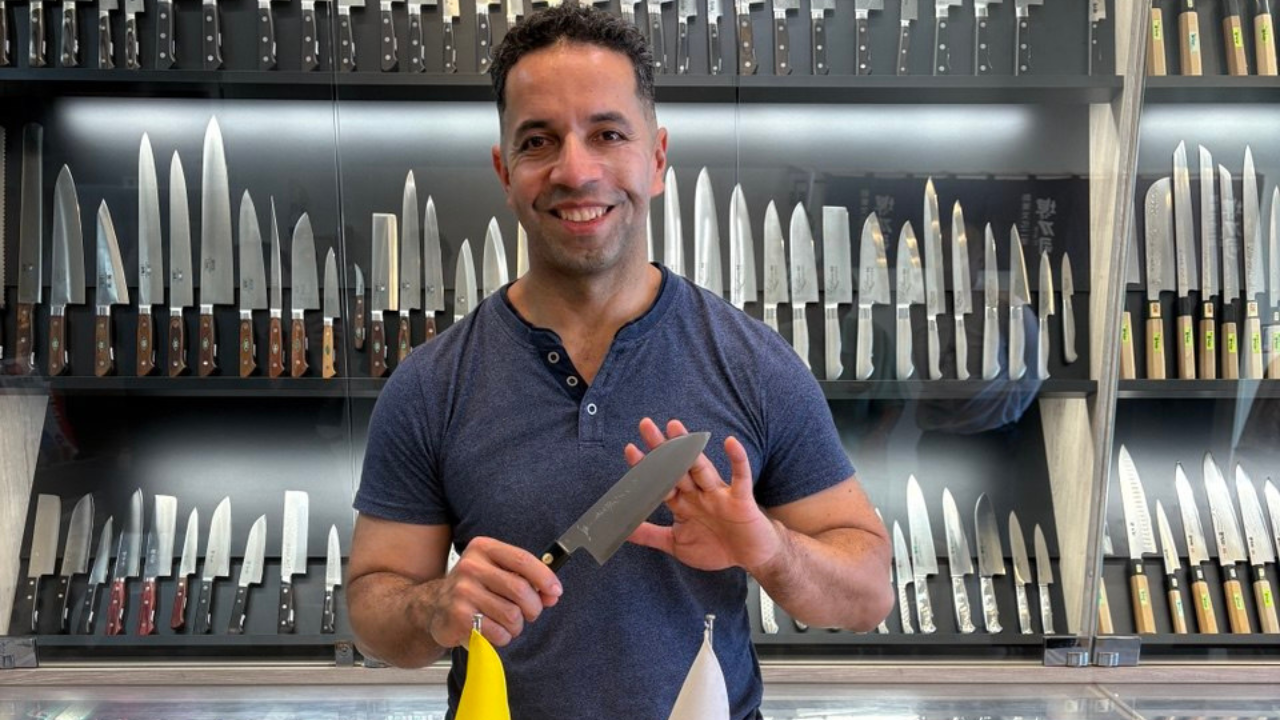
Craft Your Own Knife in Sakai: Handle-Making, Name Engraving
Fit the handle onto a real Sakai knife with a craftsman's help, watch your name engraved on the blade, and see a private knife museum. Private, 2.5 hours.
 SHARPENING CLASS
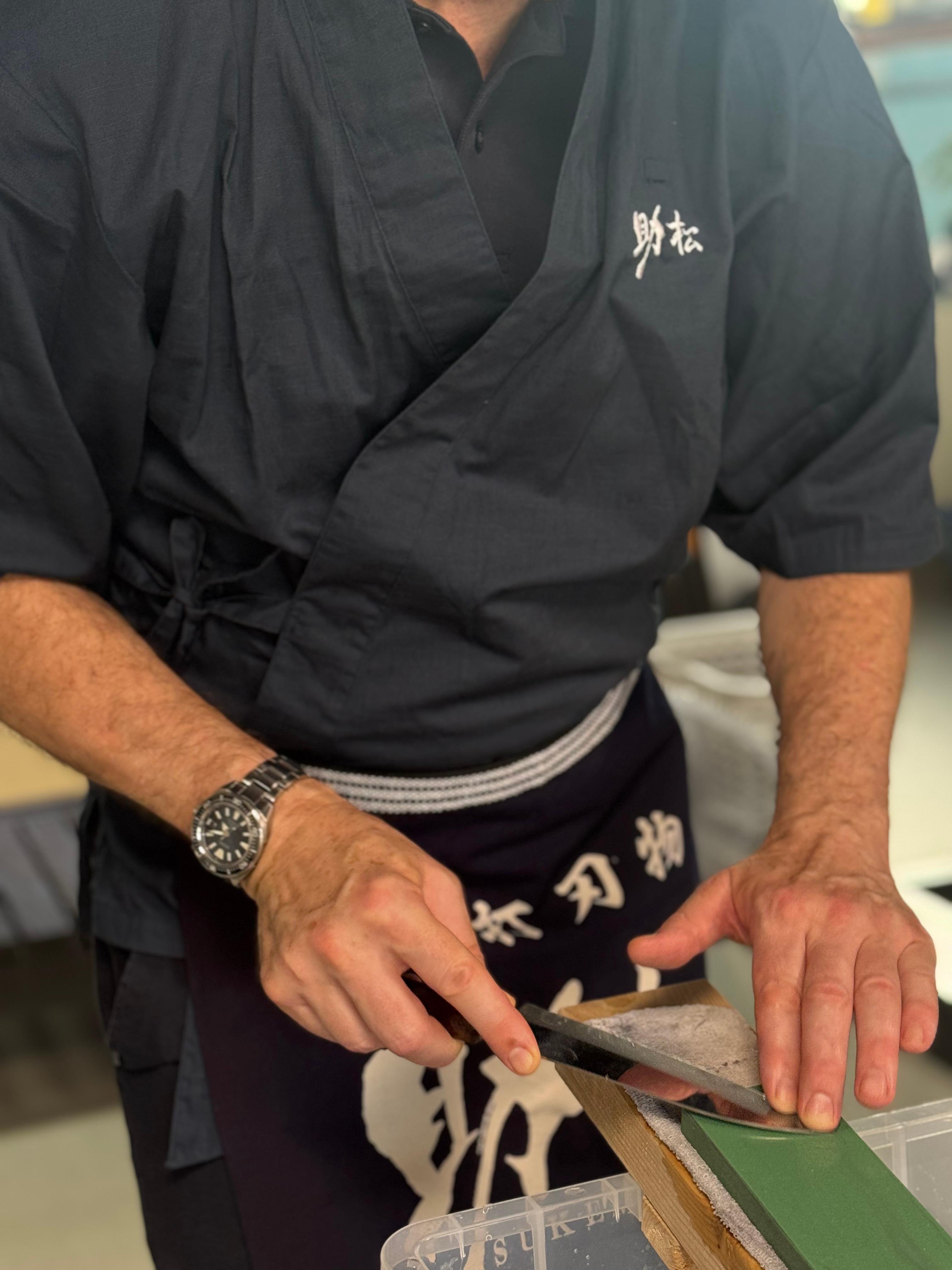
Sakai: Japanese Knife Sharpening Experience
A knife museum visit, then whetstone sharpening and handle fitting on practice knives, with an English interpreter. 1.5 hours; no knife to take home.
 PRIVATE, WITH TEA
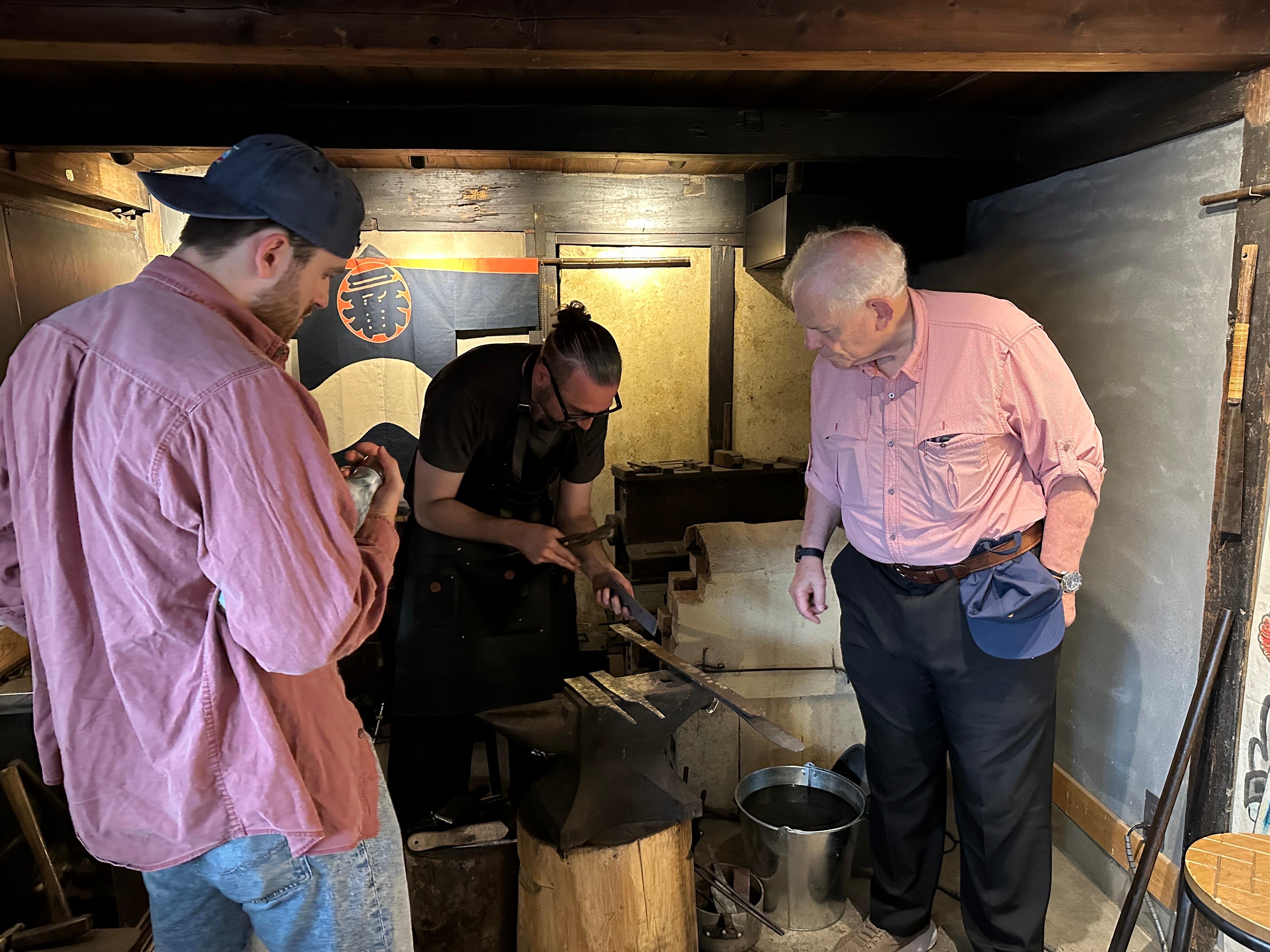
Sakai Knives: Private Access Tour with a Native Expert
A private three-hour walk with a Sakai local: matcha and sweets, a ride on the Hankai tram, the crafts museum and a knife showroom or forge, depending on the day.
The Honest Guide
What Knife Making in Osaka Really Means
Where the knives come from, which booking fits, and how to get one home.
Knife making in Osaka means Sakai, ten minutes south of Namba by train, and in Sakai nobody hands a visitor a hammer. What you can book is the next best thing: a guided walk into a working sharpener’s floor or a blacksmith’s forge, a workshop where you fit the handle onto a Sakai blade and watch your name being cut into it, or a whetstone class. For most people the walk is the right first booking. It has the most proof behind it (4.8 from 97 reviews), it costs from about $45 as of October 2026, and it takes you through doors that are closed to anyone walking around on their own.
Check dates for the Sakai walk
Why Sakai, and what the numbers actually say
Sakai was a trading port in the 16th century, when tobacco arrived from Portugal and the town’s smiths started making knives to cut the leaves. In the Edo period those tobacco knives sold across Japan with the shogunate’s approval, and the skills turned to kitchen knives. In 1982 the national government listed Sakai blades as a traditional craft.
You will read that Sakai makes “most of Japan’s knives”. It does not, and the two figures people quote measure different things. Osaka’s tourism bureau puts Sakai’s share of the domestic market for professional knives for Japanese cuisine at about 90%: the single-bevel yanagiba, deba and usuba that chefs use. By volume, the bigger producer is Seki in Gifu, which a Japanese government publication credits with about half of the country’s kitchen knife production. Sakai is the chef’s town; Seki is the volume town. One trap while you shop: G.Sakai is a knife company in Seki, not a Sakai maker.
How a Sakai knife gets made: one stage per trade
The reason a Sakai tour works the way it does is the town’s division of labour. A knife here passes through several separate businesses:
- The blacksmith forges the blade from heated steel and iron.
- The sharpener grinds, shapes and polishes it on large grinding wheels and whetstones.
- The handle maker makes the handles, often from magnolia wood, with water buffalo horn or ebony for the better ones.
- The knife company or wholesaler fits the handle, engraves its name on the blade and sells the knife.
So when you buy a knife with a maker’s name on it, several workshops were usually involved, and two brands can share a smith. It is also why the walking tour goes to a different place depending on the day: Tuesdays and Thursdays to the Yamawaki Hamono knife maker, where blades arrive from the smith and are sharpened and finished, and Wednesdays to a blacksmith’s forge. If seeing the fire matters to you, book a Wednesday.
Which Sakai booking fits you
Three products cover what most visitors want. They differ in what you leave with.
Book whichever fits:
Most visitors
Knife maker or blacksmith walk
Inside a sharpener's floor or a forge, a whetstone lesson and the crafts museum. Order a knife only if you want one.
Check the walk →Leave with your own knife
Handle-making and name engraving
Fit the handle on a real Sakai blade; a craftsman engraves your name in Japanese. Packed for travel.
See the workshop →Already own good knives
Japanese knife sharpening class
Whetstone sharpening and handle fitting on practice knives, after a knife museum visit. No knife to take home.
See the class →Prices, ratings and review counts from our October 2026 data check; operators change prices, so treat them as the shape of the market, not a quote.
One smaller option is worth knowing. A three-hour private walk with a Sakai local (from about $60) adds a matcha and sweets stop and a ride on the Hankai tram, and visits a knife showroom or a forge depending on the day. It has little review history yet. At the top end, a private ten-hour car day from Osaka (about $1,230 for a group of up to six) adds the Sumiyoshi and Otori shrines and Shinsekai; its knife activity is a beginner session, not forging.
The Sakai Traditional Crafts Museum
Every Sakai knife booking above stops at, or starts near, the Sakai Traditional Crafts Museum (Sakai Denshokan). It is free and worth an hour even on your own:
- Hours: 10:00 to 17:00. Closed on the third Tuesday of each month (the next day if that Tuesday is a public holiday) and from 29 December to 3 January, with occasional other closures.
- Ground floor: the Takumi shop, selling knives from Sakai makers and whetstones, from everyday knives to professional ones.
- The knife museum, CUT: how Sakai knives are made, the tools and the history, with a chandelier built from knife-making materials.
- Classes: sharpening and incense-making sessions run on the second floor.
- Getting there: 3 minutes on foot from Myokokujimae stop on the Hankai tram, or about 10 to 15 minutes from Nankai Sakai Station.
Note the third-Tuesday closure if you are planning a Tuesday walk. Two knife makers also run small museums of their own, and the G. Sakai Knife Museum people mix it up with is in Seki, not Sakai; sakaiknifeworkshop.com sorts out which is which, with the demonstration days.
Getting to Sakai from Namba or Umeda
Take the Nankai Main Line from Namba to Sakai Station, about 10 minutes. That station is the meeting point for the walking tour and the handle-making workshop. From Umeda, ride the Midosuji subway line to Namba first. Sakai has several stations with similar names, so check you are on the Nankai Main Line. The Hankai tram, Osaka’s last street tram, is the slower, more scenic way in, running south from the Tennoji area.
Getting a knife home
- Checked luggage only. Knives cannot go in cabin baggage on any airline. TSA allows them in checked bags if the blade is sheathed or securely wrapped.
- In Japan, carrying a blade longer than 6 cm without a good reason is an offence. Taking a newly bought knife home counts, but keep it boxed and wrapped and go straight to your hotel or the airport.
- Tax-free shopping changes on 1 November 2026. Instead of paying the tax-free price in the shop, you pay the full price and the 10% consumption tax is refunded after customs confirms the goods are leaving Japan. Do that check at the airport before you check the bag with the knife in it.
If you want to forge from raw iron
Then Osaka is the wrong city: none of the Sakai bookings above puts you at the anvil. Go to Kyoto, where a blacksmith runs a three-hour session from a piece of iron; thingstobookinkyoto.com covers Kyoto’s knife-making workshops, forging and sharpening, in detail. If you are staying in Osaka and cooking is the point of your trip, the knife angle is half of what a sushi making class teaches, and the rest of Osaka’s cooking classes are a short walk from Namba.
Guest Reviews
What Guests Say About the Sakai Walk
4.8/5
from 97 verified guests
"the tour was very interesting show the old traditional ways of forcing knives and the candy making."
"Our guide not only explained what was happening at Sakai, but was clearly knowledgeable about the surrounding area."
"Jean was a fantastic guide, full of knowledge and kind and patient. We really enjoyed our tour and got to see the entire finishing process. And got to take home an amazing knife at the end of it!"
"Excellent tour! Jean-Yves was a very good guide and switched between French and English to make it easier for everyone to understand. He explained the history of the city very well, and how cutlery-making made Sakai a stronghold of Japan. The visit to the museum was also great! Finally, the visit to Eric Chevalier's forge was fascinating! I highly recommend this activity."
"Remi was lovely and the Sakai knife makers skills where nicely shown. Brilliant walking tour for those interested in Kitchen / professional level knives for cooking or just learning something new."
"Our tour guide Remmi was incredibly knowledgeable. We learned so much from not only Sakai knife district but Japanese culture and traditions."
"The guide was very helpful.. and even though it was raining it was worth it. thanks"
Read all 97 verified reviews
See All ReviewsGo Inside a Sakai Knife Workshop
The Sakai knife maker or blacksmith walking tour, rated 4.8 by 97 travellers, from about $45 as of October 2026. Ten minutes by train from Namba. Starting from $46 per person in current promotion (usually $77).
Check AvailabilityCan't Make These Dates?
Browse More Available Options
Find a tour that fits your schedule. Dates and cancellation terms are on each listing.
Sakai Knives and Knife Making in Osaka: Common Questions
What the questions people ask about Sakai actually come down to.
Yes. It is Japan's best-known town for professional chef knives. Sakai, just south of central Osaka, has made blades since the 16th century, when it turned out knives for cutting tobacco, and the national government listed Sakai blades as a traditional craft in 1982. Osaka's tourism bureau puts Sakai's share of the domestic market for professional Japanese-cuisine knives at about 90%. The walking tour below visits a working knife maker or a forge.
In small workshops in Sakai, with each stage done by a different trade. A blacksmith forges the blade, a separate sharpener grinds and polishes it, a handle maker supplies the handle, and a knife company or wholesaler fits the handle, engraves its name and sells the knife. So two knives with different brand names can come from the same smith. It is also why a Sakai tour visits a sharpener on some days and a forge on others.
A knife made in Sakai, usually a forged, single-bevel blade of the kind Japanese chefs use. The town is known for traditional single-edged knives (sharpened on one side only, which gives a finer cutting angle), such as the yanagiba for sashimi and the deba for fish. Sakai workshops make double-bevel Western-style knives too. "Sakai Hamono" and "Sakai Uchihamono" have been registered regional trademarks since 2007.
If you cook or care about knives, yes. Otherwise it is a quiet half day. Sakai is about 10 minutes from Namba by train, the crafts museum is free, and its shop sells knives straight from Sakai makers. What you cannot do alone is walk into a sharpener's or smith's workshop; that is what the guided walk sells. For a second stop, Sakai has the Daisen Kofun, the vast keyhole-shaped burial mound attributed to Emperor Nintoku.
From around ¥10,000 to well over ¥100,000. Osaka's tourism bureau describes the shop at the Sakai Traditional Crafts Museum as stocking knives from about ¥10,000 up to more than ¥100,000, with a good sashimi knife around ¥60,000. Hand-forged single-bevel knives cost the most. A first gyuto or santoku for a home kitchen usually sits at the lower end of that range.
Usually, for the same knife. Abroad, the price carries shipping, import duty and a distributor's margin. In Japan, visitors can also shop tax-free on purchases of ¥5,000 or more at one store in a day. From 1 November 2026 that works as a refund: you pay the full price including the 10% consumption tax and get it back after customs confirms the goods are leaving Japan, so keep the knife reachable at the airport until you have done the tax-free check.
In a knife town or a cooks' street, where the staff sharpen and can explain steel. Sakai is the obvious choice in Kansai: the crafts museum shop and the makers' own stores sell direct, and some will engrave a name. In Tokyo, Kappabashi kitchen-tools street plays the same role. Buying where the knife was made also lets you ask how it was sharpened and how to care for carbon steel, which a department store rarely can.
Yes, in checked luggage, never in your carry-on. TSA allows kitchen knives in checked bags if they are sheathed or securely wrapped. In Japan, carrying a blade longer than 6 cm without a good reason is an offence; taking a newly bought knife home counts as a good reason, but keep it boxed and wrapped and go straight to your hotel or the airport. Check your own country's import rules if you are not flying to the US.
Yes, on every airline, as long as the blade is covered. Leave it in the shop box with a blade guard, or wrap it so it cannot cut a baggage handler or an inspector. Knives are not allowed in cabin baggage at all. The handle-making workshop packs the finished knife for travel; if you buy in a shop, ask for the box and a blade guard.
Enough to buy a forged blade from a real maker, which in Sakai starts around ¥10,000. Above that, price follows steel, how the blade was made (hand-forged single-bevel knives cost the most) and the knife type. A long yanagiba for sashimi costs far more than a santoku. Buy for the cooking you do: most home cooks need one gyuto or santoku and a whetstone, not a set.
You can finish one, not forge one. In Sakai, the hands-on options fit a handle onto a blade the town's smiths have already forged and add a name engraving, or teach whetstone sharpening. None of the Sakai bookings puts a visitor at the anvil. For forging from raw iron, the place is Kyoto, where a blacksmith runs a three-hour knife-making class.
Yes, entry is free. The museum (Sakai Denshokan) opens 10:00 to 17:00. It closes on the third Tuesday of each month (the next day if that Tuesday is a public holiday) and from 29 December to 3 January, with occasional other closures. The ground floor shop sells knives and whetstones; the knife museum, CUT, covers how Sakai knives are made and hangs a chandelier built from knife-making materials.
Nankai Main Line from Namba to Sakai Station, about 10 minutes. That station is the meeting point for the walking tour and the handle-making workshop. The crafts museum is about 10 to 15 minutes on foot from there, or 3 minutes from Myokokujimae stop on the Hankai tram. From Umeda, take the Midosuji subway line to Namba first. Sakai has several stations with similar names, so check the line on your ticket.
Still have questions? Email us at info@osakacookingclass.com